


Harry Potter and the Methods of Rationality
Saturday, October 9th, 2010Great Harry Potter fan fiction. Harry Potter reimagined as a rationalist encountering Rowling’s world of magic.
Great Harry Potter fan fiction. Harry Potter reimagined as a rationalist encountering Rowling’s world of magic.
I’ve had trouble finding info. A google search on “crystal binding proteins” sorta worked.
IgA binds to cholesterol crystals:
Cholesterol crystal binding of biliary immunoglobulin A: visualization by fluorescence light microscopy. Lammert et al. World J Gastroenterol. 2001 Apr;7(2):198-202.
There no doubt are proteins that bind to calcium carbonate shells material, but I couldn’t find info on them. I think shell is formed like bone, by cells increasing the local concentration of Ca++ so it crystallizes out of solution rather than by direct enzymatic action.
Collected references on DNA sequencing by synthesis and related next-gen sequencing technologies:
I would like a source for science news articles that actually has the science. Biology articles that include gene names and what a study actually found. Stories that describe things with the correct technical terms, not ‘the internet is like a series of tubes’. News stories written at an old-time Scientific American level, at the level of medical or graduate school alumni magazines. Stories that link to the journal article, to the institution or lab’s page, the patent, that link to Wikipedia or a relevant site for background.
What I would really like a source that linked standard news accounts of science to an extra-science version of the news. This site could write the extra-science article, but no need for redundancy–if some other site has an account with the relevant details then this site would just link to it. ars technica’s Nobel Intent science news site often does the job, but of course they only cover some of the news and don’t provide the nexus–linking the weak tea news stories to their articles.
The nexus should facilitate the connection. Allow the user to enter the news site URL, story title, or a sentence of text and recognize the story and link to the extra-science article. Standard keyword searching would be useful as well. The Reeves lab had an almost perfect example of the empty science news story taped up: ‘Scientists clone brain gene. This discovery will lead to an understanding of how the brain works.’
Forwarded my blog from my old server to this one. Added a Rewrite rule to httpd.conf on the old server in the main site <VirtualHost *:80> section:
        RewriteEngine On

        RewriteRule ^.*/blog(.*)$ http://jimlund.org/blog/$1
The Northwest Passage, the sea route from the East coast to Alaska along the shore of North America is open! This is the third straight year it’s been open after being ice bound for something like 6,000 to 8,500 years.
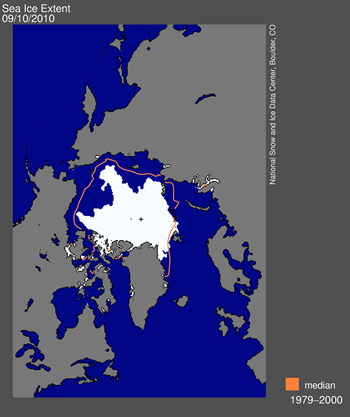
I expect that for kids growing up now it will always be open, and only news if a particularly cold year closes it.
Shakepeare’s Sister posted on the very cover of The Overton Window, a thriller by Glenn Beck. I haven’t read it, but the plot is described as weak Randianism dumped in a Mixmaster with a thrillerish suppression of conservatives by the establishment and counterrevolution story.

He points out the the Statue of Liberty has been turned into a man. But it gets odder than that!

The other really strange thing is the viewpoint. It’s the back of the statue. And it’s been turned to face Manhattan. Why? I did a search of pictures of the Statue of Liberty and none of the first hundred were a back view. All showed the face, either full on or from the side to include Manhattan. I don’t know what to make of it, but it creeps me out!
There are many things that go bump in the night, and more that put up an awful clamor. It would be interesting to put a microphone outside, pipe it to a computer, and have the computer identify what’s out there. Many animals make distinctive, repetitive calls of the sort that should be recognizable by fairly simple audio analysis. The cricket, cicada, and frogs, to name a few.
So put a microphone outside, pipe the data in by cord, or wireless internet, and record and analyze it. Run it first through Fourier analysis and then identify duration/frequency patterns. Calls with a certain pitch lasting for a certain interval. Some calls are more complex, a chord, a pattern of notes, etc. Calls range from simple insect calls to complex bird calls. Then run repetitive patterns found through a species identification algorithm.
The output would indicate what animals were detected and at what times, and perhaps record audio samples of each type. This sort of data collected routinely each night would give a dynamic picture of the fauna of an area. Crickets at night, birds at daybreak.
If many people used this software and sent data to a central collection point, it could be used to monitor animal range and abundance, and perhaps indicate aspects of regional and year to year variation by detecting what species appear and when each emerges after winter.
Some work has already been done on the software end of this. Here are papers on bird calls, bird calls, and insect recognition.
Here’s a site with a good Postscript library for drawing variable width lines.
To add a rounded end I added an arc command after the bolt function:
20 setlinewidth

newpath 0 0 moveto

0 -50 200 -150 200 0 rcurveto

currentpoint

reversepath bolt

5 0 179 arc

fill
I used two of these curves to draw a stylized pear.
Sources of free to use / copyleft animal photos online.
Best–usually has the species name:
wikipedia.org
Sometimes has the common name, accuracy unknown:
http://www.freenaturepictures.com
http://animalphotos.info/
http://www.flickr.com/search/advanced/? Set the creative commons checkbox.
US animals, NPS and FWS images are public domain unless indicated otherwise:
http://search.usa.gov/search/images